Monday, January 9, 2023

Essentials for Essex


"HIYA...you alright?"


“Right, you?”


Get used to saying or hearing that over and over again. Perhaps it makes no sense but welcome to England!


From mushy peas, to Guy Fawkes, to many modes of transportation, the U.K. can be a confusing place! But this blog will tell you everything you must know to confidently navigate an exchange year at the University of Essex. 


Arriving

If you arrive at London Heathrow, Stansted, Gatwick, or London Luton, you will need transport that gets you to Colchester or Colchester Town Station. The best ways to do this is by train (also called tube, rail, or underground), or the national express bus. Book ahead of time and prepare yourself for any transfers that may occur. Rail strikes are common, so have a backup plan for this too.


Transportation in General

I just want to say, make friends with cars if possible. Public transportation is unreliable because there are rail strikes so often and the busses sometimes are too crowded or just don’t show! Even the taxis are easily booked up at peak times. And there are no ubers or lyfts or anything like that. I’ve been in emergency situations where I needed a ride and the only option was asking a friend. If I didn’t have that as an option there was no alternative! Make friends that drive!!


The Campus

At first sight, the University of Essex campus looks like a huge city, even from far away, but after a few days you’ll get to know the place well. If you feel lost or confused and noone is around to help, look up your destination on the FindYourWay website. Along with this, you can be using ‘city mapper’, ‘apple maps’, ‘google maps’. 


Main takeaways:

-Head to Colchester Station or Colchester Train Station via bus or train

-Take bus or Taxi from the train station to the University of Essex

-Panther Cabs number (as of ‘23) is: +44 1206 525525

-DON’T rely on Uber. THERE IS NO UBER IN RURAL ENGLAND

-Look at the campus layout with “Find my Way” 

-Apps to Download: City Mapper, Apple Maps, Google Maps, Bus, 411 Taxi, Panther Cabs, My Essex

-The town is an hour walk from the University


Housing

North Towers - up to 15 roommates good for parties, close to classes and library, shared bathrooms

South Courts - up to about 25 roommates, good kitchen, good for parties, next to gym, different bus, shared bathrooms

Copse - Nice, above mailroom, own bathroom

Quays - across the bridge, next to Dominos, Bambu, a nice kitchen space, pronounced KEYS

Meadows - This is the only community that has a locked gate, this is where I lived and I think it was AWESOME

The Houses - chill, shared bathrooms, inexpensive


Socials

England has a strong drinking culture. For this reason, the University of Essex is home to two bars and a club. The legal drinking age is 18, and drinking even earlier is normalized. This is why you’ll see open alcohol all over the campus and young people drinking on the benches and public areas. 


Its normal to drink with your boss, coworkers, and even professors. Academics and working people drink a lot, and I do my homework in a pub as I would a cafe. There are many events to attend in the day or night. 


There is always a “pres” (preez), pregaming, event before going out. This gives you time to bond with friends or teammates, but you also have to do it because alcohol is too expensive at the bar or club, but so cheap from the grocery store.


If you choose the University subzero club, there will be a long queue (line) that closes at midnight. You also need to get a ticket even if it’s free. So get there around 11.45. Expect to be home by 5am. To avoid a horrible hangover every morning, I tried to drink very little, not mix drinks, or just have non-alcoholic beverages.


If you’d like to try new things, there are so many societies to choose from. I joined: 

Athletics (cross country and track)

Tennis

Jewish

Choir

Debate

Psychology

Southeast Asia

Book

Feminist

Kickboxing


University of Essex is home to over 120 societies, so compared to some people I know - I didn't even have much on my plate!


Accommodation

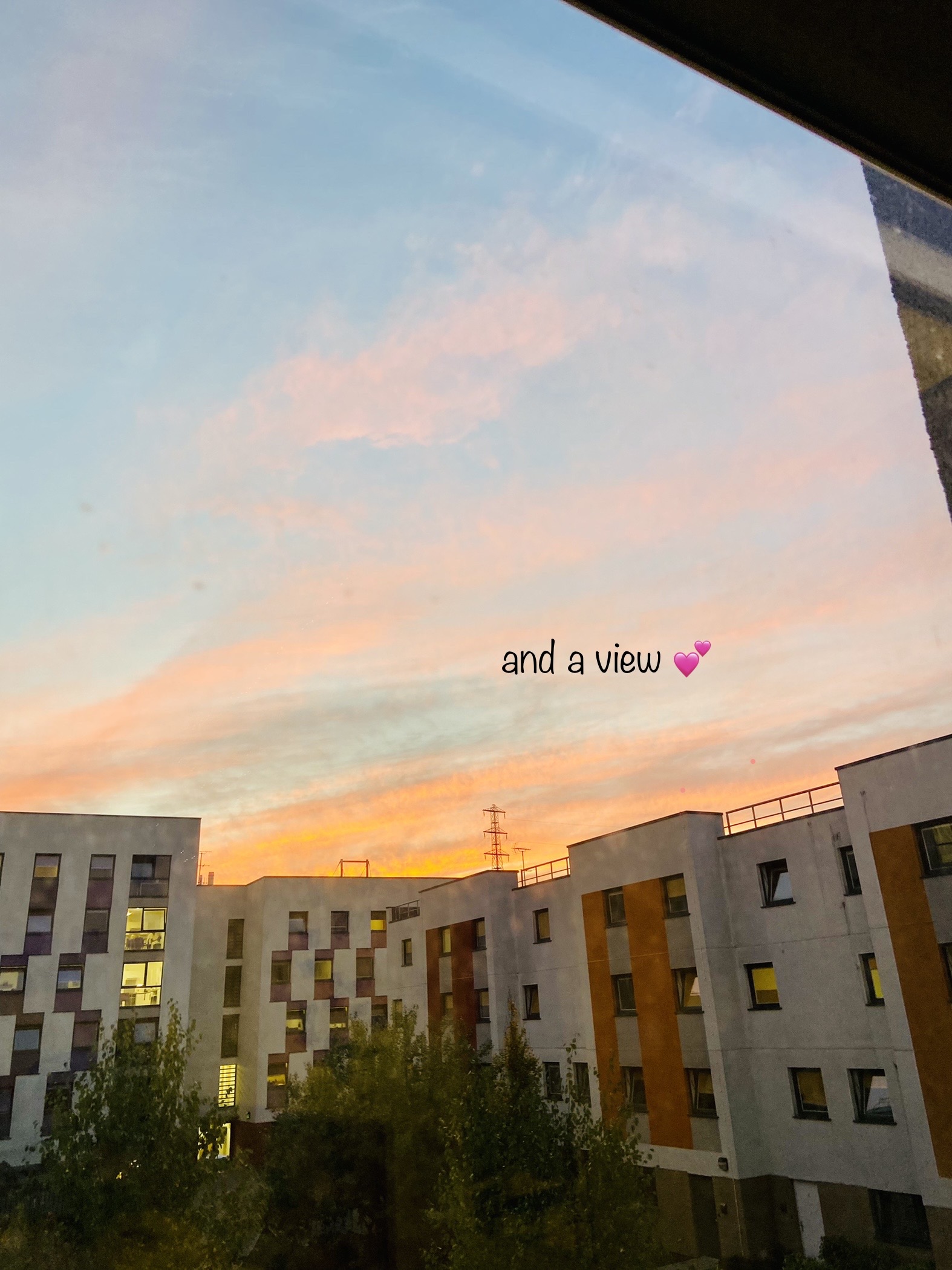
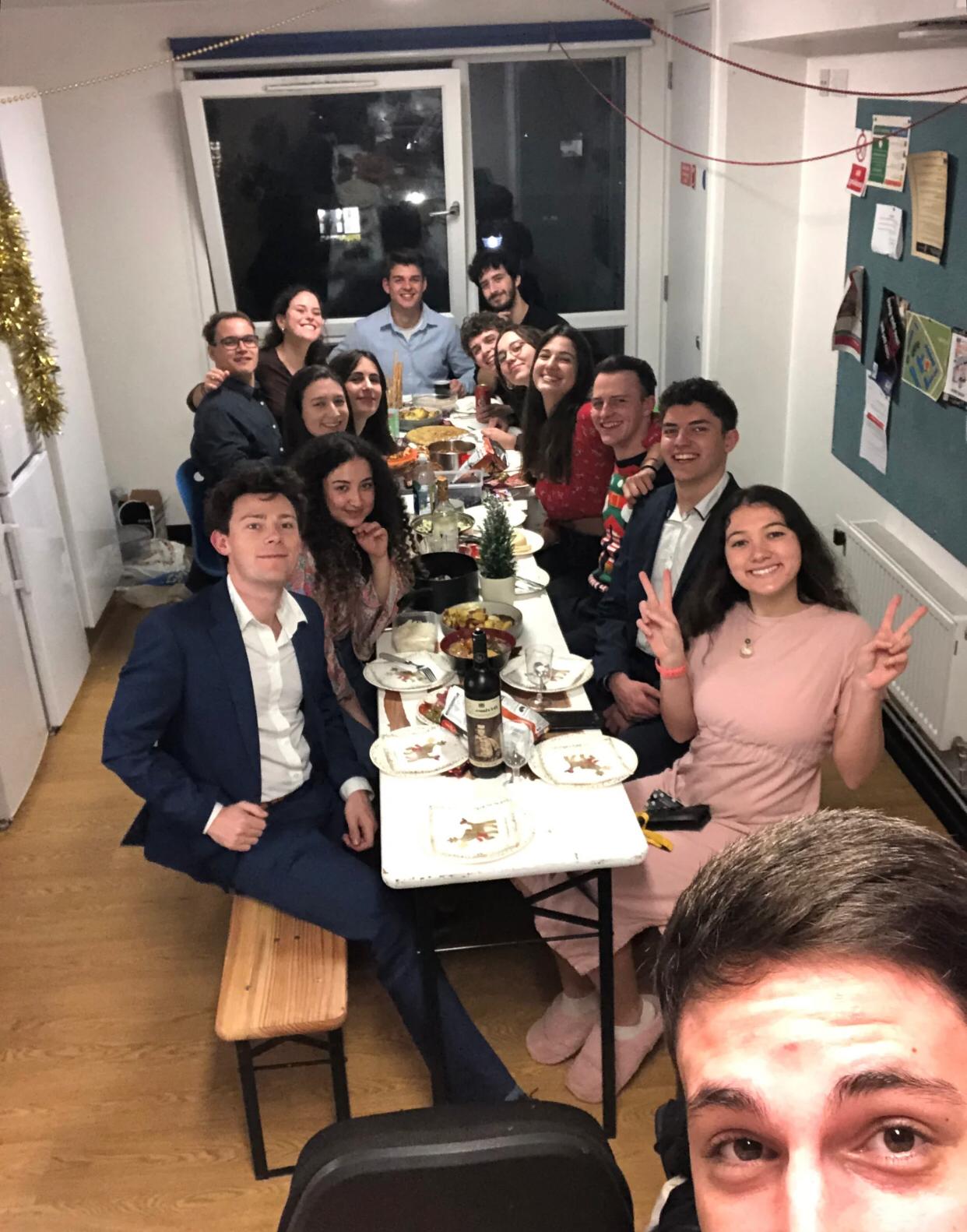
I lived in the Meadows with two roommates from France, one from China, and another from Georgia, U.S. My CA was English and our neighbors were from Mexico, India, Africa, and different parts of Europe. So its safe to say that the University of Essex is a highly International school, with ⅓ of its students from outside of the U.K. But not too many Americans! So if that’s what you’re interested in, you’re in for an incredible cultural experience. I ALSO highly recommend the Meadows accommodation for a close knit community and beautiful residency. You get your own bathroom, room, and a large shared kitchen space for $600/month. But that's on the pricier side.


Cost of Living

The University does a lot to help with the cost of living. There are many free events for entertainment and food.


Over 12 on campus restaurants have $2 meal deals, where you can get a hearty hot meal from the menu each day. So eating out with friends it not super difficult.


Most students get all of their groceries from the nearby Tesco, which is a glorified British Walmart. Tesco is the best. They also have “meal deals”, a snack, drink, and entree for $3.50.


Make your way into as many WhatsApp group chats as you can to score free furniture and good opportunities.

 shoots!

Monday, October 24, 2022

The Familiar Foreigner

Xin chào


Welcome to Vietnam ☺️ Strap on your Andes helmet, and allow me to whisk you away to a sea of honking scooters alongside fresh earth, golden rice fields, and copper pod trees to charm you with their beckoning sway.


Scents of savory fried tofu and sweet milk flower will fill your nose once we reach the heart of Hà Nội. Be careful to not burn your calves or kick any passersby as you dismount the scooter parked on the sidewalk in front of Café Giàng. I’ve made both of these mistakes.


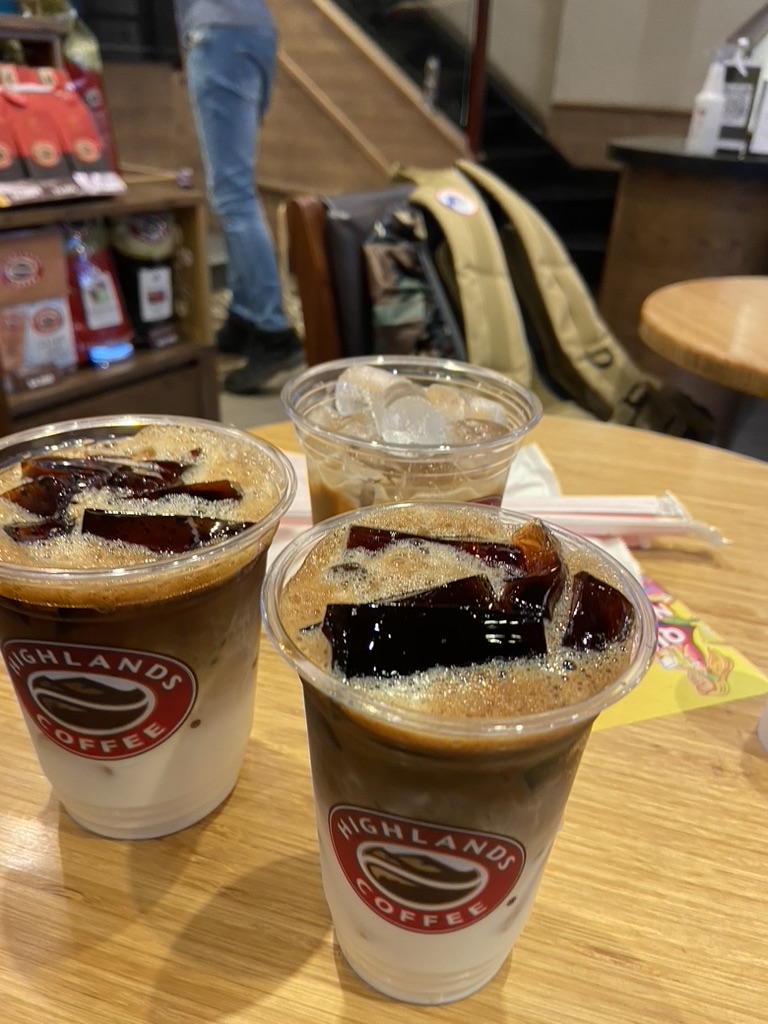
We’re at this café to try the famous cà phê trứng. This is a special egg coffee invented in the 40’s during a time of necessity. When there was no cream available, a man named Nguyen Giàng whisked together a combination of eggs and sugar. 


Struggle meals often stick. Not only did this creation suffice for the time being, it also became one of Vietnam’s most beloved delicacies for years to come.


At about 100mg of caffeine per cup, Vietnamese cà phê is much stronger than American coffee. Coffee shops are an impressive social component of Hà Nội’s thriving community, and often stay open until 11 p.m, or just never close. People are happy to gather for coffee well into the late hours of the night.


The most delicious and popular coffees to try are cà phê trứng, along with cà phê sữa, coffee with condensed milk, bạc xỉu, white coffee with lots of condensed milk, cà phê dừa, coconut coffee, and the recent but iconic cà phê muối, which is salted coffee with a hint of caramel.


On my first day in Hà Nội, I checked into a hostel and walked around Hoàn Kiếm lake. A very young Vietnamese girl spotted me out as a foreigner and asked if she could join me on my walk to practice her English through conversation. 


I’m like, child, where is your mother?


This girl spoke perfect English because after school, her mother made the two-hour drive by scooter each day from their village to Hà Nội for “English Lessons”. These lessons involved a hunt for approachable foreigners to speak with, and her mother safely observing from a distance. Her mother did not speak English, since they lived too far away to interact regularly with foreigners. 


Over six generations ago, my family lived northeast of Hà Nội, in the Bắc Ninh Province. While Southern Vietnam only has two seasons, Northern Vietnam is home to all four. Hence, falling leaves and Autumn poetry. 


The middle section of Vietnam is the most difficult place to live because of their monsoons from September to April. Northern Vietnam uses a 6-toned language, while Southern and Central Vietnam have 5 tones and varying dialects.


Vietnamese language is adaptable, and it boasts special meanings and imagination. Over time, it has been influenced by Chinese, French, and English.


The very landscape is full of legends and stories that connect history with symbolism. According to my Grandma, Ba Thuy, Hà Nội is the central city of the North, based between three rivers. means “river”, while Nội is “middle”. It is surrounded by River Đáy River Hồng And River Nhuệ.


During the third dynasty, King Lý Thái Tổ saw a flying dragon and named the capital of Vietnam “Thăng Long”, “Rising Dragon”, for this reason. The dragon flies west from Hà Nội, over Bắc Ninh, and to Hạ Long Bay. For this reason, “Hạ Long” means “landing dragon”. Naturally, I followed the flight of this dragon and found myself in Hạ Long Bay.


I wondered if my ancestors spent their time here. There was not much development so it may have looked the same. I felt glad to experience a natural, undeveloped Vietnam. The biggest cave discovered here is called Son Dong, which is three caves beyond Hạ Long Bay. 


<----

On my upper right-hand side, I noticed the rocks look like feet dangling off the cliff.


In
Hạ Long Bay, I hiked the Đảo Tí Tốp island, kayaked through Tuan Chau, and explored the stalagmites and stalactites of Hang Sửng Sốt cave. When Vietnamese people look at a cave, it’s like cloud watching. You’re supposed to use all of your senses to imagine different symbols and stories that the cave is telling you with its different rock formations.

When I returned to Ha Noi, different family members took me to their favorite restaurants and cafés. My cousin Tanh took me to the Lý Club. I found this restaurant to be the most interesting because it serves as a French Vietnamese cafe in the morning, a Latin American club at night, and the very hospital my Uncle was born in long ago.


Hà Nội has 36 old quarters, and my family lived right next to my hostel on 11th and 12th Hue street, after migrating from the south during the revolution in 1945. 


My Aunt took me to a café that used to be her house. She got me three different drinks: milk bubble tea, chia seed lemonade, and cà phê sữa; I liked them all a lot.


I made my way to the Múa caves by rowing through green fields of baby rice. Since it wasn’t quite rice season yet, the young green stalks were harvested to make cơm, a rare Vietnamese dish, and piled near the crops.


My great-Grandfather was an engineer for the very train you’d take to travel across Vietnam. He is among the first group of Vietnamese engineers. The railroad ran from the North to the South, and Cambodia to Laos. During that time, his wife and family moved with him from North to South, and then Laos and Cambodia all throughout the time spent working on this railroad.


From Hà Nội, I visited the surf in Đà Nẵng and the old village of Hội An.


I ended the trip in Bà Nà (Lady Ponagar) Hills before leaving for Ho Chi Minh City. 


Ho Chi Minh City was once called Saigon. There’s a noticeable political and linguistic difference between terms used by the old and young generations in HCMC. The Northern government named Ho Chi Minh City after the old president, because his strongest desire was to unite the country.


I ate incredible food in Ho Chi Minh City because I made it my mission to find everything that my Grandma would buy from the markets. This included bánh xèo, bánh giò, bún chả, bánh cuốn, xôi đậu phộng, cơm tấm, xôi khúc, nước mía, bánh giầy, giò lụa, and even bánh chưng, which I had on Vietnamese Independence Day.


I ventured out to visit Củ Chi Tunnels, and learned about the strategies that were in place for the Vietnam war. It was common for familes to crowd into their home’s 4 sq meter bunker when they heard bombs dropping. Since the Vietnamese could escape through the Saigon river, Củ Chi was chosen as the prime location between Saigon and Cambodia.


Tunnels were dug by hand with no electricity, and the Ho Chi Minh trail was long, stretching from North to South. There were 16,000 gorilla forces and 5,000 of them were women.


I thought about how babies were born in these tunnels. People tried not to enter the fighting zones or go out at night. War changed the peaceful countryside of Củ Chi. Above these tunnels 60 years ago, my Grandma had become established with her laundry business and prepared to move my family to O`ahu. 


My Grandmother is Thuy Thu-Lam Nguyên, the first Vietnamese concessioner with PX . She wrote a book about her life, “Fallen Leaves”, printed by Yale University a few years ago for the students to study about Vietnam.


Returning to Củ Chi, now that the war is over, I saw that there are still many hazards and death traps in the well preserved tunnel. It is a reminder of the privilege I live in to not witness the war crimes my family did.


I used my privilege to visit Vietnam as an appreciative tourist, while many of my elders who fled during the 40’s are unable to return because of their PTSD.


I didn’t know what to expect in Vietnam. I was afraid that I wouldn’t resonate with any of it because I am only a quarter Vietnamese. But walking in the footprints that my Grandmother left only a few decades ago sparked a deep gratitude in me. 


Returning to the motherland as a familiar foreigner, everything I’ve accomplished shows I’m a result of the sacrifices and prayers I am just beginning to understand.

I hope I’ve given a fair warning that loving Vietnam may become my whole personality for the next 3 years 😋

I plan to get my Bachelor’s degree and some TESOL classes under my belt by spring 2023. The dream is to graduate on my birthday, May 8, and move to Vietnam to teach English for a year before graduate school.


So that’s my future. It’s incredible where study abroad has lead me after saying yes to every opportunity that came my way. 


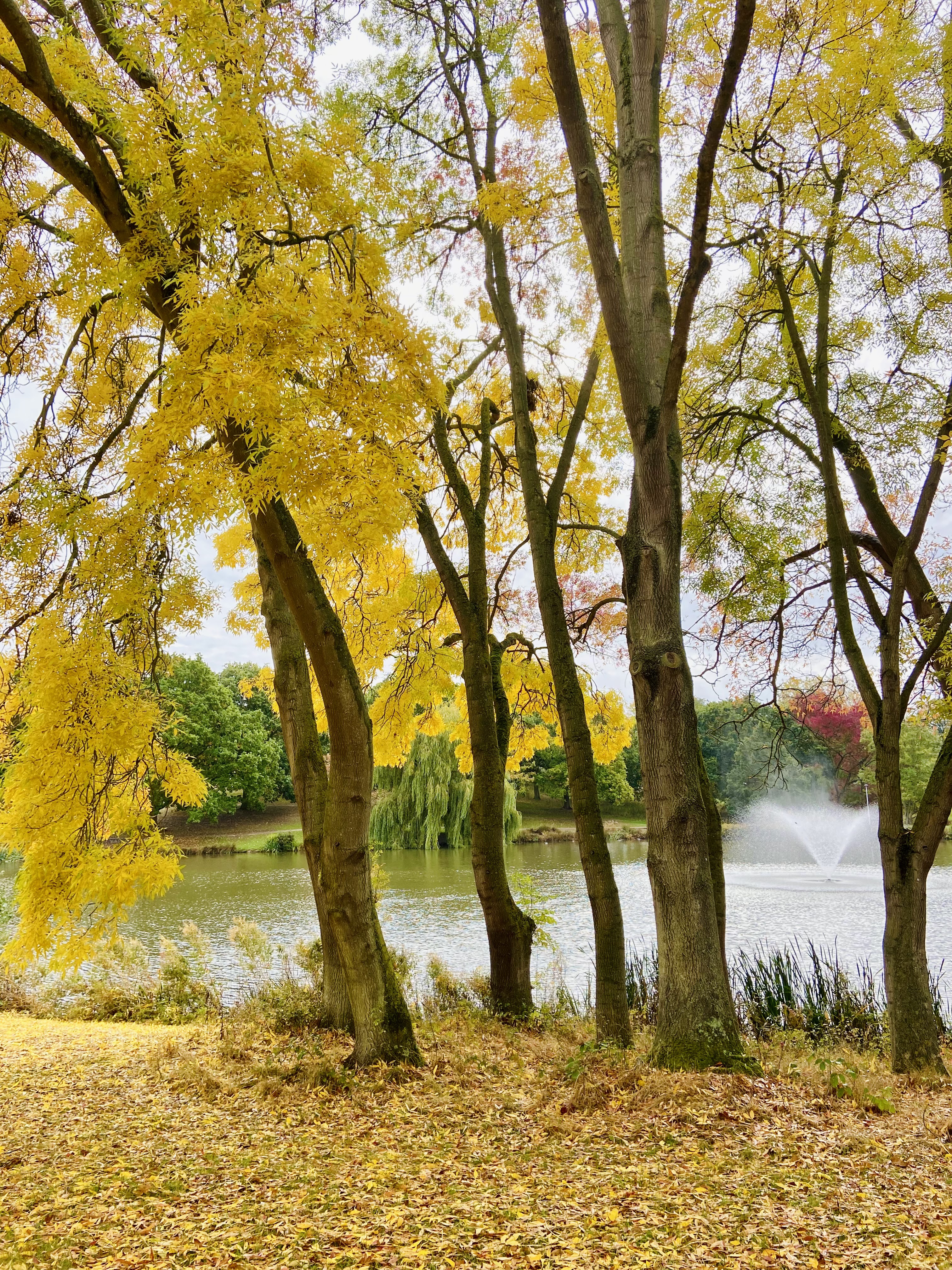
Presently, I am safe n sound in Colchester, England and spending my Autumn term at the University of Essex. For the first time, I get to watch the leaves change color as I take classes, begin my next blog, participate in clubs, and create my Gilman Scholarship community project. 


Stay tuned to learn more about the University system in England, because this really is a great school and I’m already enjoying my classes and societies so much.